Prof. Dr. Mehmet Binnet highlights how a sedentary lifestyle can harm our health and lead to orthopedic problems.
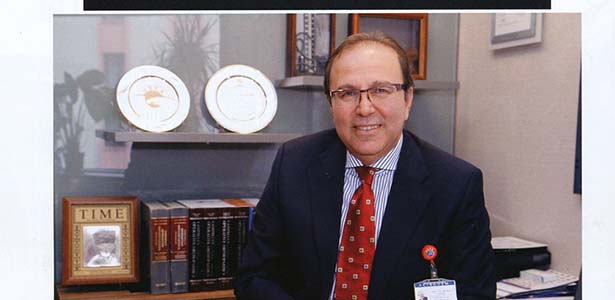
We move less in the winter than in the summer. This is due not only to the desire to avoid the cold weather but also to the fact that we cannot feel the sun’s energizing effects. As is the case every year, Prof. Dr. Mehmet Binnet, an Orthopedics and Traumatology Specialist at Acıbadem Ankara Hospital, notes that people’s ability to move has decreased this winter as well, and he highlights that remaining too sedentary can harm our health and lead to orthopedic problems.
The most fundamental characteristic of our body, which is composed of joints, bones, and muscles, is its ability to move. In other words, the functioning of our body is based on movement. So what happens if we don’t move enough? Our body’s functions begin to deteriorate, and our joints, muscles, and bones stop working as they used to.
As a result, not only does our mobility decrease further, but we also begin to experience symptoms such as fatigue and pain. Prof. Dr. Mehmet Binnet, an orthopedic and trauma specialist at Acıbadem Ankara Hospital, notes that a range of orthopedic issues begin to emerge as a result of inactivity, and explains that this can lead to a variety of consequences, from postural problems to muscle and joint pain.
OFFICE WORKERS ARE MOST AFFECTED
Rapid technological advancements, longer working hours, and the resulting increase in the number of desk-bound workers are among the primary causes of rising sedentary behavior. Prof. Dr. Mehmet Binnet, who notes that sedentary behavior increases with colder weather, emphasizes that sitting at a desk for extended periods is the leading trigger for muscle and joint pain.Citing the example of a 28-year-old patient who works as a banker, Prof. Dr. Mehmet Binnet says, “When he didn’t take his mild pain—which began with inactivity during the first year—seriously, his neck pain worsened.”
IT LEADS TO POSTURAL PROBLEMS OVER TIME
Explaining that people typically visit a doctor only when the discomfort they feel begins to affect their daily lives, Prof. Dr. Mehmet Binnet says, “By that point, the body has already lost its former elasticity. Postural problems begin to emerge. This negatively affects the body’s weight distribution. Afterward, it takes more time to restore muscle tone.”
SIMPLE EXERCISES FOR THE OFFICE
Prof. Dr. Mehmet Binnet, who says that the easiest way to resolve these issues is through exercise, explains, “Due to sitting postures and a lack of movement, muscles begin to shorten over time. When you start moving again, this leads to pain. However, it is possible to minimize these problems with some simple measures.”
Emphasizing that maintaining good posture is one of the most important habits, Prof. Dr. Mehmet Binnet shares the following exercises:
-Sit up straight and turn your head from side to side without bending your torso. Do this 10 times, 3 times a day, resting for 5 seconds between repetitions.
-Push your right arm down and place your left hand on top of your head. As you slowly tilt your neck to the left, stretch with your hand. Do this 10 times, 3 times a day, resting for 5 seconds between repetitions.
– Every two hours, pull your shoulders back and release them five times. This movement helps prevent stiffness in the upper back muscles.